

SRINAGAR: Hailing from Chakreshipora, a small village in Bandipora, 63-year-old Fareeda Begum sits on a shabby hospital bed at the Sher-i-Kashmir Institute of Medical Sciences (SKIMS), Soura, one of the topmost hospitals in the valley, her hands holding a faded Golden Card.
For two years, she has battled breast cancer, a disease that claims lives of over 1.1 million women annually in India, the third highest in cancer cases after China and the US, according to the Indian Council of Medical Research (ICMR) and GLOBOCAN 2022 data."
The card, part of the Ayushman Bharat Pradhan Mantri Jan Arogya Yojana (PM-JAY), promises free treatment up to Rs 5 lakh per year.
Yet, each therapy (including radiotherapy and chemotherapy) cycle costs more than Rs 40,000, with diagnostic tests like MRI and CT scans, adding more expenses that have pushed her family to the brink of financial ruin.
“I believed this card would save us,” Fareeda says, her voice trembling with exhaustion. “But it’s a hollow promise. My husband, a daily-wage labourer, can’t keep up. Our daughter’s schooling is at risk, and our son, unemployed, carries the weight of our debts. We’re not just fighting cancer. We’re fighting here a system that’s failing us.”
A Promise on Paper
On paper, the Golden Card promise includes all drugs, check-ups, testings, immunizations, and, in some cases, delivery rooms as well, all overseen by a community health officer.
However, the ground reality tells a different story.
In 2018, the Modi administration launched the Ayushman Bharat Pradhan Mantri Jan Arogya Yojana (PM-JAY).
The scheme's major aim and focus was to completely reduce the financial burden of medical bills on poor families across the country and provide them an access to high-quality healthcare services.
The households involved in the scheme were chosen based on the deprivation and occupational criteria of the Socio-Economic Caste Census 2011 (SECC 2011) for rural and urban areas.
The PM-JAY scheme also offers a uniform benefit cover of up to Rs. 5 lakh (cashless) per family annually, which covers costs for tests, consultations, and medical care; pre-hospitalization; medications and medical supplies; non-intensive and critical care services; diagnostic and laboratory tests; medical implantation services; lodging benefits; food services; treatment-related complications; and up to 15 days of follow-up care after hospitalization.
By providing financial protection to millions of families, the scheme was meant to significantly improve the healthcare system of India.
However, the promise of the scheme has been marred by challenges and shortcomings, leaving thousands of families without access to basic healthcare.
The Ground Reality
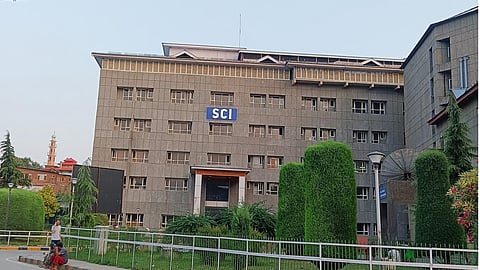
For almost three and a half years, Muhammad Sadiq, 60, of Anantnag, South Kashmir, has been fighting cancer. Presently, he is receiving treatment at the state cancer Institute (SCI) at SKIMS, Soura Hospital, located in the central Kashmir Srinagar.
Despite possessing a Golden Card, he had trouble getting free medical care and medications, which resulted in high costs and piling of debts.
"We have not received a single medication under the scheme," he said. Every cycle of treatment costs us over more than Rs 38,000. It puts a great deal of stress and strain on my family”, he said.
Ulfat Jan, an 18-year-old attendee, shared a heart-touching story of her mother's battle with cancer.
“Often, I’m told by the Ayushman pharmacy that the medicines for my mother’s chemotherapy are not available in the scheme,” she says, and adds, “But the same medicine is available at this pharmacy if I purchase it.”
“If the pharmacy is dedicated to this scheme of aiding patients who cannot pay for their treatment, then why is the pharmacy selling chemotherapy medication at the counter?” she questions.
Ulfat's mother has been battling cancer for the last over 2 years, and the Ayushman Bharat Scheme's promise of covering up to ₹5 lakhs per annum has proven to be a distant dream.
"We were shocked to find that the scheme would cover only a small percentage of the chemotherapy costs while leaving us to bear a huge and unaffordable cost per session," she says, her eyes welling up with tears.
Ulfat’s story is not unique, and many Kashmiri families are struggling to access affordable healthcare due to the failures of the scheme.
“There are inconsistencies in the scheme and cancer patients are waiting for these to be rectified,” she says, adding, “They cannot wait too long…”
Ulfat's family has been severely affected by her mother's ovarian cancer diagnosis in June 2023. After the major surgery, her mother is currently undergoing therapy cycle treatments at the SKIMS Soura Hospital.
The Cycle of Debt
The Ayushman Bharat Yojna was initially designed for families that were Below Poverty Line (BPL). However, later, it was expanded to include other categories like senior citizens above 70.
Sitting by her mother's hospital bedside, 21-year-old Urmat spoke about the plan in a dejected tone.
"The scheme was initially meant only for the poor," she explains. Everyone is using it now, including those who are able to pay for their own medications. "Those in need of the scheme's advantages rarely get it,” she adds.
Her father, a labourer, is the sole breadwinner of the family, who is struggling to make two ends meet and help his wife in her treatment. A student of Class 12, Ulfat worries about her education, but her mother's health has been given priority.
With her father being the only breadwinner, the financial burden of her mother's treatment is overwhelming.
Several patients while talking to the Kashmir Times say, their treatment cycle is worth more than ₹30,000, but the scheme allegedly only covers a meagre percentage of the medical expenses. The families have to bear the remaining exorbitant expenses from their own pocket.
"It's like an endless nightmare," she said, explaining the financial difficulties her family is facing.
"We are constantly worried about how we will pay for our mother's treatment, and it is affecting all of us. We are deep in debt and don’t know how we will ever be able to pay it off,” she says.
Stress, she points out, is also impacting the health of all family members. Yet, she clings to hope. "I just want my mother to get better," she says.
A Nationwide Pattern
Jammu and Kashmir is not a case in isolation; the scheme’s efficacy has been questioned across the country. The hospitals are suspending services due to pending payments from the government.
In states like Haryana, Rajasthan, Manipur including Jammu and Kashmir, private hospitals are turning away patients because the government has yet to pay them.
In 2019, the scheme was allocated Rs 2,400 crore. In 2020, the budget was greatly expanded by 166% to Rs 6400 crore. Two years later, there was a pitiful Rs 12 crore increase in the budget. The budget was raised to Rs 7200 crore in 2024, with only a Rs 100 crore increment for the plan in 2025. Rs 9500 crore has been allocated in 2026.
Despite these annual allocations, the government owes the empanelled hospitals under the Ayushman Bharat Scheme (AB-PMJAY) a total of approximately Rs 1.21 lakh crore for over 63 lakh unresolved claims.
This information was disclosed by the National Health Authority (NHA) in response to a question posed by a Right to Information (RTI) application by Ajay Basudev Bose.
In response to this, the NHA disclosed that a total of 63,89,517 claims remained uncleared, and these pending claims led to a staggering amount of Rs 1,21,61,45,63,617 remaining as outstanding dues to empanelled hospitals under the Ayushman Bharat Yojana.
The inordinate delay in receiving reimbursement has hampered the cash flow of private hospitals and created serious operational issues.
On August 7, 2025, more than 650 empanelled private hospitals in Haryana have suspended the Ayushman Bharat Pradhan Mantri Jan Arogya Yojana (AB-PMJAY) scheme, citing pending bills amounting more than Rs 490 crore.
Delayed Payments and Inadequate Hospital Coverage
Private hospitals across the country face six to eight months’ delay in claim settlement under the scheme.
Since its launch, over 600 Private hospitals have decided not to participate in AB-PMJAY, citing reasons such as delayed payments and low reimbursement rates.
On August 7, 2025, the Indian Medical Association (IMA) Haryana chapter declared that the state's Ayushman Bharat scheme services would be suspended (services suspended by 650 private hospitals) due to the unpaid debts of empanelled hospitals, even though the state government had promised to release the funds as soon as possible.
Similarly, private hospitals across Jammu and Kashmir also ceased free medical services under the scheme due to pending payments of Rs 350 crore. As a result, they limit treatments or direct patients to private labs not covered by the scheme.
"Payment delays disrupt everything," said an administrator at SKIMS, who requested not to be named.
“We are always ready to keep drugs available or pay our workers. For patients, medications exhaust fast or are not available, and our workers face the dual stress.”
Patients complained about the frustrating verification checks required each time they visit hospitals.
"The hospital system often clashes with the central database," Ulfat said. "We are repeatedly asked to come back after a fresh appointment.”
Mismatch and False Entries
The misuse by hospitals presents a significant concern. The National Anti-Fraud Unit assessed 66.6 million claims, of which 270,000 claims amounting to Rs 562.4 crore were flagged for abuse or false entries, resulting in the de-empanelment of 1,114 hospitals.
A recent report shed light on how a woman suffering from chest ailment died in Shivpuri, Madhya Pradesh, as she could not access healthcare because the system could not "fix" the biometric error in her ID card.
According to the 2024 Oxfam India report, 47% of eligible recipients were refused treatment because of administrative or technical obstacles, such as inactive e-cards, biometric mismatches, or hospitals merely denying Ayushman cases.
Millions of people only see Ayushman Bharat on banners, not on hospital beds.
“Sometimes the pharmacists give us the medications. Sometimes they say it is not free and is excluded from the scheme. If there is any corruption, it goes unchecked,” Ulfat says.
Have you liked the news article?
Support us now:
https://www.gofundme.com/manage/jammu-kashmirs-sole-independent-voice-under-threat