

On February 1, 2023, residents of Nayi Basti, in Thathri, noticed something unsettling. Cracks had begun appearing overnight in the walls of houses, across roads, and through the foundations of a local mosque. Within days, what had seemed like isolated damage revealed itself as something far more serious.
More than twenty structures were declared unsafe. Hundreds of families were forced to abandon their homes and move to temporary shelters, taking with them whatever they could carry of lives built over decades.
The incident drew immediate national attention, primarily because it echoed a crisis that had recently shaken Joshimath in Uttarakhand, where an entire Himalayan town had begun sinking into itself.
Geological experts from the Geological Survey of India, the National Institute of Technology, Srinagar, and other agencies arrived to investigate. Their findings were unambiguous and shocking. The affected area sat on an old landslide zone. Continuous water seepage, poor drainage, unstable geological formations, and excessive loading on already vulnerable slopes had combined to trigger the subsidence. The area was formally declared unfit for habitation.
For those displaced, it was more than a geological event. It was the loss of homes, of memories, of investments made over a lifetime.
Thathri’s Transformation
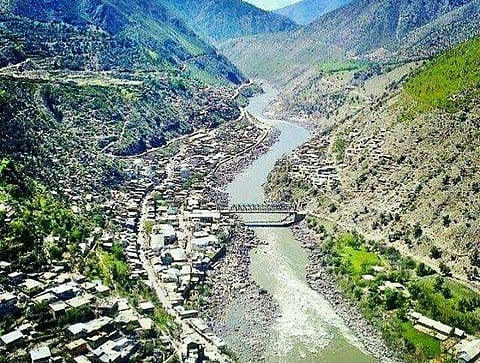
Thathri is a small town in the Doda district of Jammu and Kashmir, perched on the fragile slopes of the Chenab Valley, surrounded by streams, dense forests, and the kind of rugged terrain that has for generations defined both the beauty and the vulnerability of Himalayan life.
For decades, it served as the principal gateway to the mountainous regions of Bhalessa and Kishtwar - a conjunction between lowland Jammu and the high reaches of the valley.
Today, however, Thathri has become a symbol of growing environmental distress: natural disasters, geological instability, unchecked developmental activities, and alleged environmental violations have combined to create a serious ecological crisis.
The land subsidence of 2023 was not an isolated misfortune but the loudest signal in a mounting series of warnings.
Over the past three years, the region has witnessed devastating land subsidence, repeated cloudbursts, flash floods, landslides, and growing concerns over riverbed mining, stone crushers, and hot-mix plants. Environmental activists, local residents, and experts have repeatedly warned that unless strict measures are taken, the consequences for the fragile Himalayan ecosystem could be severe and irreversible.
Cloudbursts – 2024 to 2026
In June 2024, a cloudburst struck the Thathri area. Flash floods and landslides sent mud and debris sweeping through market areas, damaging vehicles, shops, and infrastructure. The Batote-Kishtwar National Highway was blocked for hours.
Barely two years later, in June 2026, fresh cloudbursts and intense rainfall again struck parts of Doda and Thathri. Roads were inundated, property damaged, daily life suspended once more.
Climate scientists studying the broader Himalayan region have noted a troubling pattern. Rather than rainfall distributed across days, mountain areas are increasingly experiencing sudden, concentrated cloudbursts that release enormous quantities of water in a matter of hours.
For a town already sitting on geologically unstable ground, this combination is particularly dangerous. The land cannot absorb what the sky delivers all at once.
Added to this natural fragility comes a set of questions about what human activity has been permitted and what has been permitted to continue unchecked.
A Disaster Acknowledged but Forgotten
The National Green Tribunal took cognisance of the situation following the subsidence in 2023 and wider concerns about environmental degradation across Doda district. The Government of Jammu and Kashmir constituted a high-level committee, drawing in representatives from the Geological Survey of India, the Central Pollution Control Board, environmental experts, and senior departments.
The committee's recommendations were substantive: scientific mapping of vulnerable slopes, identification of subsidence-prone zones, restrictions on construction in geologically unstable areas, improved drainage and wastewater management, continuous monitoring of slope movement, and the preparation of proper disaster mitigation plans.
Experts noted that many settlements across the Chenab Valley share the same geological characteristics as Thathri. Without rigorous planning and enforcement, they warned, other towns could find themselves facing the same fate. But the bureaucratic action with surveys, findings and policies is not matched with action.
Riverbed Mining and Stone Crushers
One of the major concerns is riverbed mining. Streams and rivers across Doda district, including those falling within the Bhalessa and Thathri subdivisions, supply sand, gravel, and boulders for construction. Regulated mining is lawful.
But environmental activists have repeatedly alleged that what is happening goes well beyond regulation. They say that illegal extraction and excessive mechanised mining have been damaging river ecosystems for years.
The consequences of excessive riverbed mining are well documented. It alters the natural flow of rivers, accelerates riverbank erosion, destabilises stream channels, damages aquatic ecosystems, lowers groundwater levels, and increases vulnerability to floods. In mountain districts, where rivers and streams play a direct role in maintaining slope stability, these effects carry additional weight.
The NGT has repeatedly stressed that mining must be conducted strictly in accordance with environmental clearances and approved plans. The question, raised persistently by activists and residents, is whether those requirements are being met.
Stone crushers and hot-mix plants operating across the region have attracted similar scrutiny. Under environmental law, such units must obtain Consent to Establish and Consent to Operate from the Jammu and Kashmir Pollution Control Committee. This is the necessary legal mechanism through which regulatory authorities ensure that industrial activity in sensitive areas does not cause unacceptable harm.
Yet information placed before the Jammu and Kashmir Legislative Assembly in 2026 revealed that the Pollution Control Committee had ordered the closure of 158 stone crushers and hot-mix plants across the union territory between 2021 and early 2026 for environmental violations. The violations included operating without valid permissions, failure to install pollution-control devices, dust emissions beyond permissible limits, non-compliance with environmental conditions, and failure to obtain mandatory clearances.
Activists allege that some units near habitations, agricultural lands, and water bodies in this area have continued to function in defiance of closure orders, and that their operation in what is already a geologically sensitive, red-zone area compounds plainly visible risk.
Residents in several villages of Bhalessa have complained about dust settling on crops, on the surfaces of houses, and on drinking-water sources. The Central Pollution Control Board prescribes dust suppression systems, water sprinkling, covered conveyors, and green belts as standard requirements.
But in the absence of adequate or poorly maintained safeguards, it is local communities that absorb the cost: respiratory illness, declining agricultural yields, contaminated soil and water.
The Broader Context
None of this can be understood in isolation from what is happening to the Himalayas more broadly. Scientists describe this mountain system as one of the world's most ecologically fragile zones.
Rising temperatures, shifting precipitation patterns, glacial retreat, and increasingly frequent extreme weather events are changing the region at a pace that outstrips the capacity of many communities to adapt.
The Chenab Valley has seen a marked increase in landslides, flash floods, and slope instability over recent years. Road construction, slope cutting, unplanned urbanisation, and rising human pressure add further strain to an ecosystem already under duress.
The lesson that experts draw, consistently and emphatically, is that development in mountain regions must be guided by scientific assessment and environmental caution, not by short-term economic calculation.
For the people of Thathri and the surrounding villages, the stakes are huge. Farmers worry about their soil and their water. Families near unstable slopes live with a particular kind of dread that does not go away between disasters. Shopkeepers and traders count their losses each time a cloudburst blocks the highway, or floodwater damages the market.
Many are clear that they are not opposed to development, they understand its necessity. What they resist is the assumption that development and environmental protection are in conflict, and the tolerance, whether official or unofficial, of violations that place already-vulnerable communities at further risk.
What Thathri demands is a serious answer to some straightforward questions: which industrial units operating in the area hold valid permissions? Are environmental conditions being followed? Are regulatory agencies actually enforcing the law? Are the committee recommendations that followed the 2023 subsidence being implemented, or filed away?
The land subsidence, the repeated cloudbursts, the flash floods, the allegations of illegal mining, the stone crushers taken together, reveal a story of ecological distress. This is just one small story from the Himalayan belt where warnings are written into the landscape but not being taken seriously.
The choice before policymakers is clear: pursue development that respects environmental limits or risk turning ecological warnings into recurring disasters. The future of Thathri depends on that choice.
Have you liked the news article?
Support us now:
https://www.gofundme.com/manage/jammu-kashmirs-sole-independent-voice-under-threat