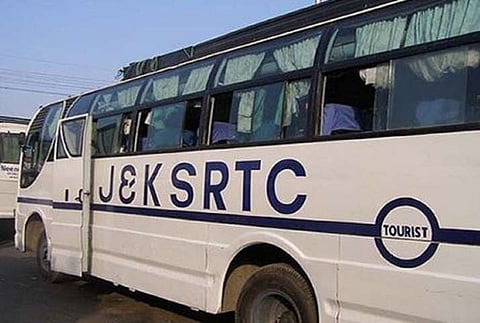

Traffic congestion in Srinagar has become a permanent feature of daily life, but the crisis it builds costs commuters hours, businesses money, and the city its livelihood. Whether it is the morning rush to the office or the weary evening return, the jammed streets remind us that the city is buckling under a load far exceeding its intended capacity.
Recognising these pressures, the city planners offer one panacea: more flyovers as the quick and visible fix. Infrastructure matters but this is a flawed remedy and has a proven track record of making things worse.
The question to be asked is: are these massive concrete structures truly solving the traffic problem, or are they merely shifting and expanding it?
The Trap of Building Your Way Out
There is a well-documented principle in urban planning called ‘Induced Demand’. This principle suggests that increasing road capacity by building more lanes or flyovers actually encourages more people to drive. Within a few years, congestion returns to exactly where it started. Instead, what you have in hand is a larger, more expensive problem embedded in concrete.
This is not a theory. It has played out in city after city across the world. Every new lane, every new flyover is followed by more traffic and the cycle repeats endlessly. Flyovers do not solve congestion. They delay it briefly, and then deepen it eventually.
What Srinagar Stands to Lose
Srinagar is not a generic city. It has a character shaped by its lakes, its light, and above all, its Chinar trees. These centuries-old trees are not decorative. They are functional urban infrastructure comprising carbon sinks and natural air conditioners; and they give the city’s streets its visual identity.
The felling of centuries-old Chinars for concrete flyovers leaves a permanent scar on the city's soul and environment. It is a net loss, with no recovery.
The consequences are measurable and compounding. Replacing tree cover with asphalt and concrete intensifies the Urban Heat Island effect, raising local temperatures, trapping pollutants, and increasing the burden on residents' health. High concrete density combined with low vegetation creates pockets of trapped pollution that directly raise respiratory risk across the city.
Beyond the engineering, the aesthetic cost of the flyovers is also devastating. These massive concrete slabs create "dead zones" — dark, damp, and neglected spaces that suck the life out of the street. What was once a sunlit walkway becomes a gloomy, unsafe corridor where pedestrians feel like intruders.
The Seoul Example
It is for these negative consequences of flyovers that some countries are moving away from auto development. A notable example is that of Seoul.
In 2003, Seoul dismantled a ten-lane Cheonggyecheon elevated highway running through the heart of the city. At the time, critics warned of gridlock. The opposite happened.
The city restored the natural stream beneath the highway, introduced a strong Bus Rapid Transit network, and let people reclaim the streets. Local temperatures dropped by 3.3°C to 5.9°C. Bus ridership rose by 15.1%. Biodiversity returned, property values rose, and the city became more liveable.
What Srinagar Needs
Srinagar requires a "human-centric" planning model rather than just an "engineering-centric" one. Instead of pouring more concrete, the goal should be fewer cars, achieved by giving people a genuinely better alternative.
A reliable public transport network is the single most effective tool against congestion. When buses are frequent, affordable, and fast, people choose them. When they are unreliable and overcrowded, people default to private vehicles, and the roads fill up regardless of how many flyovers are built.
Alongside this, safe infrastructure for pedestrians and cyclists removes the shortest and most congestion-heavy car journeys from the road entirely. And protecting every remaining Chinar must be treated not as sentiment, but as an obligation.
The Choice
Managing traffic is undoubtedly a major challenge, but its solution lies in maintaining the delicate balance between man and nature. If built without a long-term ecological vision, flyovers will be remembered not as bridges to the future, but as extensions of a problem we failed to solve.
A city should be built for the heartbeat of its people, not the exhaust of their cars.
(This news article has been updated with correction in credit to the author)
Have you liked the news article?
Support us now:
https://www.gofundme.com/manage/jammu-kashmirs-sole-independent-voice-under-threat
