

This news article is two-part series. Part-I is published today.
Drive north from Tel Aviv towards Galilee, and the landscape begins to reveal two different Israels. Modern highways connect prosperous Jewish towns with residential complexes, parks, sports facilities and well-maintained public spaces that could belong to any affluent European city. Yet a short distance away, predominantly Arab towns struggle with overcrowded housing, inadequate municipal infrastructure, limited recreational facilities and neglected public spaces.
In Nazareth, Sakhnin, Arraba, Kafr Manda, Shefa-Amr and Tamra, Arabic signboards, mosques and churches mark communities whose inhabitants have lived on this land for generations.
Farther south, the Triangle region includes Umm al-Fahm, Tayibe and Tira. In the Negev desert, Bedouin communities live in Rahat and surrounding villages, some of which the Israeli state does not officially recognise.
These are not immigrant settlements. Their residents are largely descendants of Palestinians who remained inside Israel after the 1948 war.
Today, Arab citizens constitute roughly one-fifth of Israel's population. Muslims alone number approximately 1.85 million, accounting for 18.6 per cent of the country's residents.
They possess Israeli citizenship, vote in parliamentary elections and pay taxes. Yet their communities frequently receive fewer resources, suffer higher poverty rates and remain politically marginalised.
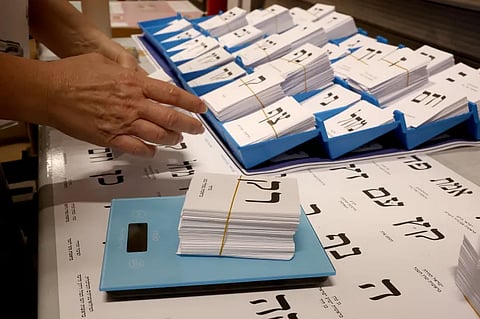
Every election brings a familiar ritual. Political parties calculate the Arab vote; analysts debate turnout and coalition strategists examine whether Arab lawmakers could determine who becomes Prime Minister.
Once the election is over, the concerns dominating Arab towns often struggle to find a place in government priorities.
It is a predicament that should sound familiar to Muslims in India.
Across Uttar Pradesh, Bihar, West Bengal and other States, Muslim voters are regularly discussed as an electoral constituency whose support can determine closely fought contests. Yet their representation in Parliament, government institutions and political leadership remains far below their share of the population.
The histories of India and Israel are different, as are their constitutional and electoral systems. But the experience of their minorities raises a common question: Why does electoral importance so rarely translate into economic security and political empowerment?
Prosperity and Poverty Side by Side
The divide between Jewish and Arab localities in Israel is particularly revealing because the communities often exist within short distances of one another.
Both populations live under the same national government and participate in the same economy. Yet access to housing, municipal resources, employment and public facilities can differ substantially.
Tal Schneider, political correspondent for The Times of Israel, described these inequalities during a recent international journalists' webinar ahead of the October 27 parliamentary election.
"The gap between the Jewish society and the Arab society, I mean, poverty and everything is just horrible," she said.
Schneider argued that Arab communities need more than formal promises of equal citizenship. They require investment in schools, transport, youth centres, sports facilities, employment opportunities and policing.
The statistics support her assessment.
According to the Israel Democracy Institute's 2024 statistical report, 95 per cent of Arab localities were concentrated in the four lowest categories of Israel's ten-category socio-economic ranking system.
At the prosperous end of the scale, 68 per cent of Jewish localities occupied the five highest categories. Every locality in the two most affluent categories was Jewish.
Poverty figures reveal an equally troubling divide.
In 2023, 38.4 per cent of Arab families lived below the poverty line. Among children, the respective figures were 48.8 per cent and 21.3 per cent.
These figures expose an inequality that goes far beyond individual household incomes.
An Arab child growing up in a poorly resourced town may have fewer educational opportunities, limited recreational facilities and weaker employment prospects than a Jewish child living only a few kilometres away.
The difference can shape entire lives.
In Arab municipalities, shortages of land available for residential expansion contribute to overcrowding. Weak commercial tax bases restrict municipal finances, while planning regulations and inadequate investment affect housing and infrastructure.
The Association for Civil Rights in Israel has repeatedly documented disparities in land allocation, education, housing and public services.
Indian Muslim Parallel
The contrast between affluent Jewish localities and disadvantaged Arab towns has echoes in Indian cities.
In Delhi, Hyderabad, Mumbai, Lucknow and other urban centres, prosperous neighbourhoods can stand close to Muslim-dominated localities struggling with overcrowding, inadequate sanitation, poor schools and limited public investment.
The Sachar Committee, appointed by the Indian government in 2005, documented the educational, economic and employment disadvantages faced by Muslims.
Its 2006 report challenged the assumption that constitutional guarantees of equality had automatically translated into equal opportunities.
The committee found that Muslims were inadequately represented in government employment, banking and several public institutions. It also highlighted deficiencies in infrastructure and services in Muslim-concentrated areas.
The problem was not simply poverty. It was the concentration of poverty within a community whose political importance was repeatedly emphasised during elections.
The parallel with Israel is not exact.
Indian Muslims live within a constitutionally secular republic, while Israel defines itself as a Jewish state. The histories of discrimination and the institutions responsible for it differ.
Yet in both countries, minority citizens can exercise voting rights without enjoying an equal share of public resources or meaningful influence over decisions affecting their communities.
Professor Asad Ghanem, a political scientist at the University of Haifa, explained the deeper political dimension in an interview with the writer.
"The main difference is that Palestinians in Israel hold Israeli citizenship. They have basic political rights," he said, distinguishing them from Palestinians in the occupied West Bank and Gaza.
"Although Israel has never treated them as fully equal citizens, they have the right to vote, to stand for election, and to be represented in the Knesset."
The distinction between formal citizenship and substantive equality lies at the centre of the Arab predicament.
Crises of Poverty
In Israel's Arab towns, economic inequality has acquired a particularly deadly dimension.
Organised criminal networks, shootings, extortion and murders have become central concerns for residents.
Schneider described the situation in unusually stark language.
"The murder rate in Arab society and villages is unbelievable," she said.
She added that fear of violence had become so pervasive that residents sometimes hesitated to leave their homes.
"It's very harsh on their lives, almost to the point where they cannot get out of the house," she said.
Schneider made an even more disturbing comparison.
"The murder rate in Israel's Arab society is much higher than the murder rate in the Palestinian areas under the Palestinian Authority," she said.
The comparison is particularly striking because these are Israeli citizens living within the country's established legal and policing system.
Schneider rejected explanations advanced in some right-wing political circles that attribute violence to Arab culture.
"They kill each other because that's their culture. No, that's not true," she said.
Instead, she pointed to poverty, weak policing, inadequate public investment and years of government neglect.
She also criticised National Security Minister Itamar Ben-Gvir for failing to provide effective protection to Arab citizens.
"The current minister really neglected their service to the common citizen of Israel, which is an Arab citizen," she said.
Mansour Abbas, leader of the Islamic Ra'am party, described the penetration of organised crime into Arab community life.
"We suffer from lots of crime. There are criminal organisations who take over our lives, our economy, even part of the local municipalities in Arab towns," Abbas said.
The figures underline the seriousness of the problem.
The Israel Democracy Institute recorded 244 Arab victims of violent crime in 2023 and 239 in 2024. The Abraham Initiatives reported 252 Arab citizens killed in circumstances related to crime and violence in 2025.
These are not simply law-and-order statistics. They represent families whose everyday lives have become overshadowed by insecurity.
For Arab residents, the demand for more police stations, functioning courts and effective investigations is inseparable from demands for better schools, housing and employment.
The crisis has raised uncomfortable questions about the state's responsibility towards its Arab citizens.
Schneider argued that the authorities must strengthen policing, improve law enforcement and invest in facilities that provide young people with alternatives to criminal networks.
She stressed the importance of sports facilities, education, transportation and employment opportunities.
Her argument challenges the tendency to treat violence as an isolated criminal problem.
When communities remain economically disadvantaged and public institutions fail to provide adequate protection, crime can become both a consequence and a driver of deeper social exclusion.
War Exposes Divide
The wars involving Gaza, Lebanon and Iran have added another dimension to the vulnerability of Arab citizens.
The majority live in northern Israel, including towns exposed to rocket and missile attacks.
In October 2024, Hezbollah rockets struck Arab communities in Galilee.
In Majd al-Krum, two young residents were killed and seven others wounded. Other attacks killed residents of Shefa-Amr and Tarshiha.
Arab municipalities complained about inadequate bomb shelters and emergency infrastructure.
Alaa Kdah, assistant Mayor of Majd al-Krum, described how his municipality struggled to provide basic protection.
"In Majd al-Krum, the shortage of shelters became so serious that the municipality positioned large concrete drainage pipes around the town as makeshift protection," he recalled.
Residents said the town, with more than 15,000 people, had only around ten outdoor shelters.
In June 2025, an Iranian ballistic missile struck a family home in Tamra, killing four women and injuring several others.
For Palestinian citizens of Israel, these attacks created a painful combination of identities and loyalties.
They shared the anguish of Palestinians facing destruction in Gaza while also confronting attacks on their own homes.
Klood Ahmed, a resident of Haifa, described the experience.
"We watched the devastation of Gaza, whose people share our language, history, and national identity, while we were also running for shelter from Hezbollah rockets and Iranian missiles aimed at Israel," she said.
The contradiction captures the predicament of a community that belongs to the Palestinian people while living as citizens of Israel.
Forgotten Citizens
The immediate concerns of Arab communities are not abstract constitutional questions.
They involve the safety of children travelling to school, the availability of affordable housing, the quality of municipal services and the possibility of finding decent employment.
These concerns become politically visible when elections approach.
Parties seek votes, candidates promise change and opinion polls examine whether Arab turnout will influence the next government.
But the poverty figures, murder statistics and unequal distribution of public resources reveal how little electoral attention has transformed everyday life.
A minority can be electorally significant without becoming economically secure or politically influential.
The test of democracy is therefore not simply whether minorities are allowed to vote.
It is whether their neighbourhoods receive the same public investment, their children enjoy comparable opportunities, and their lives receive equal protection.
In Israel, the distance between a prosperous Jewish locality and an impoverished Arab town may be only a few kilometres.
The distance between their opportunities can be far greater. And until that divide begins to narrow, the promise of equal citizenship will remain incomplete.
(Part II: When minority votes count but minority voices do not
The concluding article examines why Israel's Arab voters, like India's Muslims, can influence election results without securing a proportionate share of political power. It also explores the debate within Palestinian society over participation, boycott, and the future of citizenship in a Jewish state.)
Have you liked the news article?
Support us now:
https://www.gofundme.com/manage/jammu-kashmirs-sole-independent-voice-under-threat