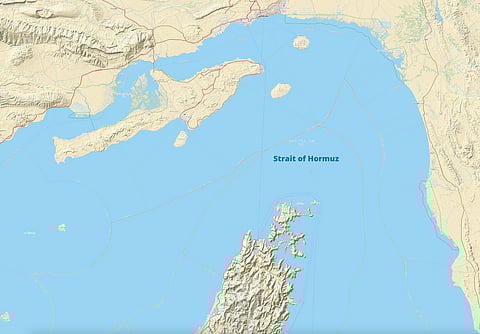


The announcement of the US-Iran deal did not arrive in a sealed diplomatic pouch. As usual it was posted on US President Donald Trump’s Truth Social "The Deal with the Islamic Republic of Iran is now complete. Start your engines, ships from all over the world. Allow the oil to flow!" It offers some relief. Only days earlier, the Strait of Hormuz had been a no-go zone under US naval blockade. Iranian fast-attack vessels surrounded every tanker. Oil markets had priced in Armageddon.
But the deal, known variously as the Islamabad Accord, the Doha Understanding, or simply the moment the unipolar order ended, is not primarily about oil. It is about architecture.
What it signals is the tectonic shift now underway: from a world ruled by one superpower to a polycentric order of overlapping influences, middle-power brokers, and digital-age brinkmanship. The Pentagon, once the singular symbol of American dominance, has effectively become a hexagon: Washington, Beijing, Moscow, Islamabad, Tehran, and New Delhi, anchored by swing states like Ankara, Riyadh, and Doha.
It’s not a grand settlement, stable or elegant, but it is suited to the moment: a managed conflict, a truce born of mutual exhaustion rather than trust. But it may be the only world on offer.
The Deal That Almost Wasn't
Rewind to late February 2026. The shadow war between the US, Iran, and Israel had erupted. Nuclear facilities at Natanz were struck in attacks attributed to Israeli assets operating from Azerbaijani territory. Iran retaliated with MIRV-equipped missiles. It was the first time such technology was used in active combat.
"You cannot intercept a bus that turns into three taxis at the last second," quipped one European defense attaché. Brent crude hit $180 a barrel. And in Islamabad, a quiet backchannel began to hum.
Pakistan's role was far from inevitable. Its economy had barely survived an IMF programme. Internal politics were fractured. The Balochistan insurgency simmered. And its regional rival India had long positioned itself as the responsible power. Yet it was precisely Pakistan's unlikeliness that made it useful.
"The Europeans were tainted by the JCPOA collapse," says IR expert Dr Muhammad Amin. "The Americans couldn't talk to Iran directly, not after the assassination of Soleimani's successor and the killing of Iran's top leadership, including Khamenei. China and Russia had influence over Tehran, but Washington wouldn't accept them as sole guarantors. So, you needed a third party everyone could tolerate."
Pakistani and Qatari diplomats shuttled between Gulf capitals, Tehran, and Washington, carrying paper between suites in a hotel near Islamabad's Margalla Hills, in classic proximity-style talks. No face-to-face, just patient intermediation. President Trump later credited Pakistan for "really helping" and said of the Pakistani side: "They knew the Iranians. They knew the people. They were excellent."
The Islamabad Memorandum of Understanding was electronically signed on June 18, 2026, by Trump and Iranian President Masoud Pezeshkian, with Prime Minister Shehbaz Sharif endorsing it as mediator. It was the first high-level US-Iran engagement since the Islamic Revolution of 1979.
The 14-point agreement is deliberately vague on specifics but clear on deliverables. Iran agrees to pause uranium enrichment above 3.67% for 18 months and expands IAEA access; the US lifts the naval blockade, unfreezes roughly $25 billion in Iranian assets, and opens the door to $300 billion in reconstruction funding.
The agreement also establishes a digital hotline between Tehran's Supreme National Security Council and Washington's newly created Gulf Crisis Office - crisis communication for the age of algorithmic escalation.
How Polycentricity Works
International relations language has always lagged behind reality. After the Cold War, we spoke of the "unipolar moment" or the unchallenged American supremacy. Then came Iraq, the 2008 financial crisis, China's rise, Russia's return. The illusion faded. What is emerging now is neither Cold War bipolarity nor Huntington's civilizational clashes. It is something messier: polycentricity. Multiple centers of power, overlapping and frequently conflicting, with real agency exercised by middle powers and non-state actors.
Consider the current geometry. Washington remains the world's single largest military power, but its willingness to project force is constrained by domestic polarisation and strategic overstretch. The Hormuz blockade was lifted less because of Iranian pressure than because Trump, sensing an election-year win, wanted a deal.
Beijing watches from the wings, its Belt and Road investments giving it a stake in Gulf stability without the entanglement of bases or boots on the ground. Moscow, still bogged down in Ukraine, provided Tehran with diplomatic cover while quietly urging restraint. New Delhi found itself sidelined, its closeness to Washington and Israel creating suspicion in Tehran; its disputes with Pakistan left it little room to manoeuvre.
And then there are the improbable hosts. Qatar's al-Udeid base houses CENTCOM's forward headquarters and its emir speaks to all sides. Pakistan offers nuclear gravity and a standing army now repurposed as diplomatic capital. Islamabad and Doha have elevated themselves from regional players to global connectors.
"The hegemon thinks in terms of bases and sanctions," one analyst observed. "The bazaar prioritises favours and face. You cannot bomb your way out of a relationship."
Broker, Not Hegemon
For Pakistan, this moment carries both promise and risk. Beyond its identity as a frontline state in the war on terror, Islamabad has long sought strategic relevance. Hosting the proximity talks and leveraging ties to both Riyadh and Tehran has inserted Pakistan into the Gulf's security architecture in a way few could have predicted a year ago.
The domestic picture is less flattering. Growth hovers below 3%. Power outages are chronic. Imran Khan remains in prison. Tensions with India persist across the Line of Control. But diplomatic success yields tangible benefits: lower global energy costs reduce Pakistan's import bill; the unfreezing of Iranian assets eases Tehran's proxy pressure in Balochistan; and being seen as a peacemaker rather than a spoiler reshapes Western perceptions of a country long viewed through the lens of terrorism and coups.
"For years, the only time Pakistan was in the news was for the wrong reasons," says a veteran analyst. "For a few weeks, Pakistan has been the mature guest in the elegant room. It won't last. Nothing does. But it's a reminder of what Pakistan can be."
The dangers are just as real. Overreach looms. Pakistan's military establishment, which retains ultimate control over foreign and security policy, may be tempted to leverage Gulf success into pressure on India over Kashmir. That would be a strategic miscalculation and a betrayal of the non-zero-sum spirit that made the Islamabad Accord possible.
The Man Behind the Curtain
Prime Minister Shehbaz Sharif was the visible face of Pakistan's mediation, but those familiar with the negotiations point to a more shadowy figure: Army Chief Field Marshal Asim Muneer.
For decades, officials in Rawalpindi have maintained secret channels to the Iranian Revolutionary Guards that no Western agency can match. These became the invisible backbone of the negotiation. When US officials needed a message conveyed to Tehran without the theatricality of formal diplomacy, it went through Islamabad.
Trump reportedly called Muneer "my favorite Field Marshal." JD Vance, at the Lake Lucerne Summit, was more personal: "An Indian and a Pakistani are two very, very important people in my life. My wife is an Indian, and Field Marshal Muneer is a Pakistani. Over the last three months, I've probably talked to him more than anyone else."
This is the diplomacy that cannot be captured in a memorandum. The whispered assurance in a Margalla Hills hotel suite and the shared cup of chai signal goodwill, the understanding that failure would cost Pakistan something far more precious than money: its reputation as a broker.
Israel's Gamble
The US-Iran deal has exposed a deepening rupture in the US-Israel relationship. Netanyahu called it "a Munich-style appeasement." Israeli officials reportedly attempted to sabotage the talks by escalating operations in Lebanon, hoping to trigger a wider conflict that would derail diplomacy. The gamble backfired. The Islamabad MoU explicitly mandates "the immediate and permanent termination of military operations on all fronts, including in Lebanon," and establishes a de-confliction cell to enforce it.
Vice President Vance issued a stark public warning: Trump is "the only head of state in the entire world who is sympathetic" to Israel, and two-thirds of Israel's defensive arsenal has been "built by American hands and paid for by American tax dollars." The message was blunt: the era of unilateral Israeli military action operating with American cover is over.
It was a masterful Pakistani move to include Israel in the framework not as a participant but as an obstacle to be managed. By positioning Islamabad as guarantor of Lebanese sovereignty and architect of a regional de-confliction mechanism, Pakistan effectively neutralised Israel's spoiler capability. In the polycentric world, even powerful states must adapt to middle-power brokerage.
Fragility as Feature, Not Bug
The Hormuz deal remains fragile. Israeli hardliners are plotting. Iranian hardliners condemn it as surrendering sovereign rights for "temporary American crumbs." The 60-day window is tight. And polycentricity is inherently unstable. Without a hegemon to enforce rules, the risk of miscalculation rises. The resumed US-Iran strikes on June 27 reveal that the Swiss-mediated talks have not fully restored stability and that the ceasefire holds tenuously with further escalation risking broader regional conflict.
But fragility is not the same as failure. The Cold War's mutually assured destruction was stable but terrifying. The unipolar moment was stable but unjust. The polycentric present is neither stable nor just, but it is flexible. Alliances shift and mediators emerge. Deals get done not because anyone trusts anyone else, but because the cost of not dealing is too high.
The first tankers to transit the reopened Strait of Hormuz were escorted, at Iranian insistence, not by US warships, but by Pakistani frigates and Qatari coast guard vessels. It was a small, symbolic ceremony. The ships moved. The oil flowed.
The Islamabad Accord offers a lesson for the age it inhabits: survival in a polycentric world belongs not to the mightiest, but to the most useful. Victory is beside the point. What matters is keeping the conversation going. Once that happens, understanding begins to flow.
(This news article has been updated with fresh US-Iran strikes on June 27, 2026.)
Have you liked the news article?
Support us now:
https://www.gofundme.com/manage/jammu-kashmirs-sole-independent-voice-under-threat