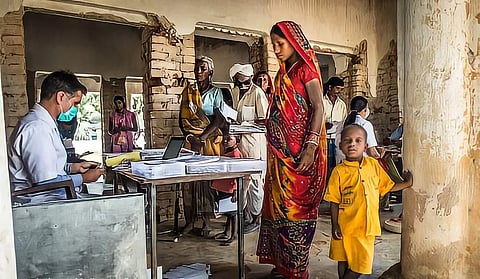


BHALESSA (Doda): A viral video from the remote Bhalessa region has triggered widespread concern after a mother, visibly distressed, asked two questions that now define the region’s healthcare debate: “Where should I go in an emergency?” and “Why is there no lady doctor at SDH Gandoh?”
The incident comes from a region that, according to Census 2011, has a population density spread across difficult mountainous terrain in Gandoh tehsil, which alone accounts for around 71,889 people, with over 20% children aged 0–6 years, reflecting a high maternal and child healthcare burden.
Demand for Specialists
Alongside the video, a widely circulating slogan, “Poochti Hai Public…,” reflects growing frustration in the Bhalessa belt. Residents argue that healthcare priorities are misplaced, saying: “We don’t need wine shops. We need qualified gynaecologist doctors.”
This demand comes against a backdrop where Jammu & Kashmir’s NFHS-5 data shows maternal mortality around 77 per 1 lakh live births (SRS 2018–20), and maternal deaths are still largely linked to preventable causes like haemorrhage and hypertension, conditions requiring immediate specialist care that rural facilities often lack.
Healthcare Infrastructure Uneven
Official records show that Doda district has a layered healthcare system including one Government Medical College, two Sub-District Hospitals, around 13 PHCs, and over 160 Sub-Centres, but distribution across remote blocks like Gandoh remains uneven.
Studies indicate Gandoh block has only a limited number of functioning centres for its scattered population, estimated at over 70,000 residents, with SDH Gandoh acting as the primary referral point for the entire Bhalessa belt. While facilities exist on paper, repeated field assessments highlight staff shortages, inconsistent specialist availability, and dependency on referrals to Doda town for advanced care.
NFHS-5 indicators for Jammu & Kashmir show an infant mortality rate of about 16 per 1,000 live births and highlight that rural outcomes are significantly worse due to delayed access to care.
In Bhalessa, geography intensifies this risk, as emergency cases often require travel of several hours to reach district hospitals. Maternal health data further shows that complications like postpartum haemorrhage and hypertensive disorders remain the leading causes of maternal deaths, and survival depends heavily on timely intervention, which becomes difficult in mountainous terrain where road connectivity and ambulance response are inconsistent.
SDH Gandoh serves as the central healthcare institution for Bhalessa, but public reports and inspections indicate gaps in functional capacity. While the hospital is equipped for OPD services, basic emergencies, and maternity care units, it remains heavily dependent on referrals due to shortage of specialists.
With Jammu & Kashmir’s rural population at nearly 72% (NFHS-5), such gaps disproportionately affect remote belts like Bhalessa, where even short delays in reaching advanced care can turn treatable conditions into emergencies.
A Mother’s Question and the Ground Reality
The viral video has gained traction because it reflects a lived structural reality rather than an isolated emotional moment. In Gandoh and surrounding villages, where female literacy remains significantly lower than the district average of around 49%, awareness and timely healthcare access are further constrained.
The mother’s question, “where should I go in an emergency?” is echoed by thousands who depend on a system where initial care exists locally, but definitive treatment is often delayed by distance and staffing gaps.
The issue has now drawn renewed attention toward local administration and elected representatives, including MLA Daleep Singh Parihar, with residents demanding urgent corrective measures.
Key expectations include appointment of a permanent qualified lady gynaecologist at SDH Gandoh, strengthening of emergency obstetric services, and improvement in referral transport systems.
These demands arise in a region where maternal health risks remain elevated due to anaemia prevalence of nearly 66% among women (NFHS-5, J&K) and where emergency delays remain a known contributor to preventable complications.
The mother’s question is no longer just a moment of distress. It is an evidence-based reflection of structural gaps in rural healthcare delivery. With over 70,000 people dependent on limited facilities, high maternal risk indicators, and documented referral delays, Bhalessa–Gandoh stands as an example of how healthcare access is shaped not just by infrastructure, but by its functionality in real time.
In that sense, the question remains unresolved but urgent. Will the administration finally respond fast enough to matter?
Have you liked the news article?
Support us now:
https://www.gofundme.com/manage/jammu-kashmirs-sole-independent-voice-under-threat