
Inside the bustling cafes of Srinagar, people engaging in debates about politics and education are filling the space with animated discussions. An old tradition is kept alive, but the sounds are transforming. Young students speak English, while local merchants negotiate in Urdu.
Among the noise, Koshur (Kashmiri), the historic and lyrical language of the valley, is retreating into a whisper. While there is much talk about preserving it in academic circles, the language is less used and less protected in everyday conversations, signaling a threat to the region’s culture.
As languages around the world disappear, losing Kashmiri could erase centuries of traditions, stories, and identity tied to the Kashmiri people.
Linguists and cultural activists are already worried, many voicing their concern that the Kashmiri language is experiencing a relevance crisis that jeopardises centuries of history, unique cultural identity, and the core of the region.
Though the world increasingly focuses on learning languages such as English and French, the most effective language tool one possesses is one’s native tongue. Recent studies and educational findings indicate that thoroughly learning one’s first language, instead of merely "using" it, can lead to significant benefits in social influence, job skills, and even in learning additional languages.
Learning the details of one’s native language takes one beyond its grammar rules and vocabulary. It enhances cognitive abilities. New research reveals a connection between mastery of native language, empathy and convincing power.
In fact, grasping a native language serves as a key to understanding history. Moreover, the bilingual advantage truly begins with a strong first language. The native grammar and idiomatic structures prepare a mental map that enables swift cognition and logic in foreign languages.
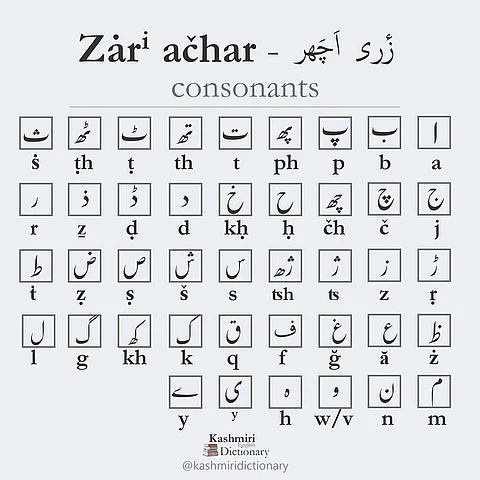
Teachers say most schoolchildren struggle to read and write in Kashmiri script. This makes it hard for them to access important history and literature. Koshur is not just a way of talking. It carries the region’s culture and history.
Culturally, the lack of fluency in Kashmiri among children creates a rootless generation. While they engage with the global internet, they feel separated from their local culture as the uniqueness of the nuances of Kashmiri culture and its hospitality are overshadowed by a uniform global culture.
Most parents speak Kashmiri to each other, the language they grew up with, but use Urdu or English with their kids. They believe this helps their children fit into the global market, but it also disconnects them from their own culture.
English and Urdu are seen as the languages of smartness and job opportunities. Kashmiri, on the other hand, is often seen as a rustic dialect, not fit for school or polite society. The decline in the use of Kashmiri isn't because there aren't enough speakers. Many people speak it, but it isn't being passed down.
Language connects generations. When younger people stop speaking their elders' language, a gap appears. This breaks the sharing of stories, family history, and wisdom. The Kashmiri language includes grammar and vocabulary, but it also carries emotions and humour, which are essential for a happy life.
Merely having government policies and software updates won't protect a language if it declines at home. A language is alive in conversation, not just in books. If Kashmiris do not treasure speaking and passing it on, Koshur will almost become history.
Think of everything that will be lost with that: the wisdom of Lal Ded, a 14th-century poet whose thoughts shape Kashmiri philosophy, the love poems of Habba Khatoon and Sufi poetry that highlight the unique blend of cultures in Kashmir (Kashmiriyat).
Will the next generation tell their stories in the language of their ancestors, or will the poetry of Kashmir eventually require a translation to be understood by its own people?
Have you liked the news article?
Support us now:
https://www.gofundme.com/manage/jammu-kashmirs-sole-independent-voice-under-threat
