

There comes a moment in every society when an individual must ask a simple question: What is the price of speaking one's conscience?
For some, that price is criticism. For others, imprisonment. For still others, it may mean the loss of livelihood, reputation, or property.
Today, I find myself confronting that question personally.
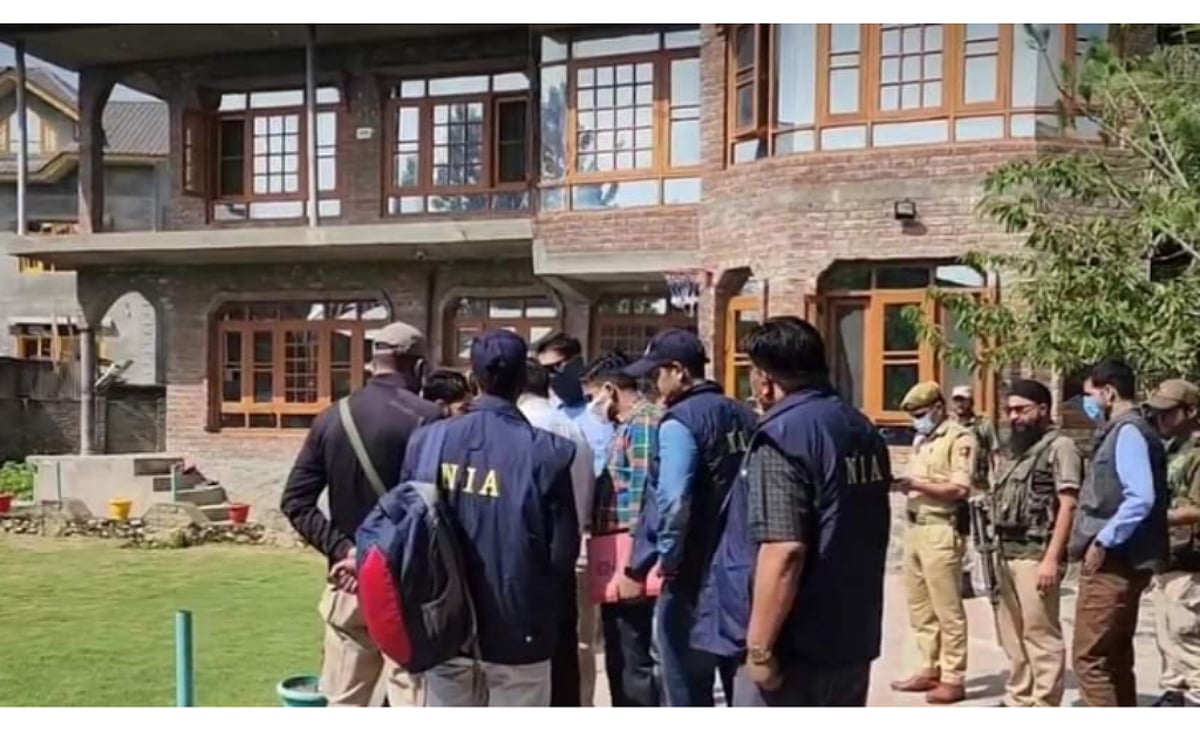
Recent reports concerning the attachment of my property have understandably attracted public attention. The legal proceedings related to my case are presently before the competent court, and I have consciously chosen to place my faith in the judicial process. My legal counsel has presented my position before the court, and I shall continue to pursue every legal remedy available to me with dignity, patience and respect for the rule of law.
I do not write these words to argue my case outside the courtroom.
The courts alone will determine the legal issues before them, and I have every intention of respecting that process. I write because the questions raised by my case extend far beyond one individual. They concern every citizen who believes that democracy derives its strength not from unquestioning conformity but from the freedom to question authority.
For most of my public life, I was known not as a politician but as a businessman. As President of the Kashmir Chamber of Commerce and Industry, my primary concern was the economic well-being of our people. I worked with governments of different political persuasions because I believed, and continue to believe, that dialogue and constructive engagement are always preferable to confrontation.
Yet there are moments when silence itself becomes a form of surrender.
When the constitutional changes of August 2019 were followed by the introduction of the new domicile policy, I expressed concerns shared by many Kashmiris. Those concerns were never directed against individuals because of their religion, ethnicity, or place of birth. They arose from a deeply held conviction that the people of Jammu and Kashmir should retain a meaningful voice in decisions that fundamentally shape the future of their homeland.
Many agreed with that conviction, while many others disagreed. That is precisely how democracy is supposed to function. Democracy does not require its citizens to think alike. It asks them to resolve differences through debate, persuasion, elections and the rule of law. A confident democracy is not threatened by disagreement; it is strengthened by its ability to accommodate diverse opinions.
Uncomfortable Debate
History teaches us that every generation confronts difficult questions about land, identity, constitutional change, political representation, migration and demographic transformation. These debates are rarely comfortable because they concern the future of entire communities. But discomfort cannot become a justification for silence, nor should deeply held political convictions automatically be viewed through the prism of national security.
The true strength of a democratic state lies not in its ability to command obedience but in its confidence to tolerate disagreement. Governments undoubtedly possess legal authority, but moral authority is strengthened when citizens know they can peacefully express even profound disagreement without fearing that dissent itself will become a source of punishment.
This principle is far larger than my own circumstances. Across democratic societies, freedom of expression protects not only opinions that are popular but also those that challenge prevailing policies. The real test of democracy is not how it treats those who support the government but how it treats those who peacefully question it. Peaceful political dissent is not a weakness of democracy. It is one of its essential safeguards.
This is not to suggest that laws should not be enforced. Every state has both the right and the responsibility to maintain public order and protect society from genuine threats of violence.
Every citizen remains accountable under the law. At the same time, democratic governance demands restraint. Legal powers must be exercised with scrupulous fairness, due process and proportionality. Citizens must never lose confidence that the law distinguishes between peaceful political advocacy and conduct that genuinely endangers public safety.
The consequences of losing that distinction are profound. When people begin to fear that expressing their convictions may cost them their careers, their businesses, their property or their future, many will inevitably choose silence over participation. Society becomes poorer as a result. Public debate narrows, civil society weakens, and younger generations begin to believe that engagement serves little purpose. In the long run, it is democracy itself that suffers.
I remain convinced that Kashmir's future cannot be secured through fear or through the suppression of competing political ideas. Lasting peace has never been built by reducing the space for dialogue. It has always depended upon creating greater opportunities for conversation, participation and mutual understanding, however difficult those conversations may sometimes be.
My own legal journey will follow its course, and I have complete faith that the courts will adjudicate the issues before them in accordance with the law. Whatever the outcome, the broader question will remain relevant for every society: Can a citizen love his homeland deeply, disagree fundamentally with state policy and still enjoy the full protection of democratic freedoms? I believe the answer must always be in the affirmative.
Throughout Kashmir's modern history, generations have endured immense hardship. Many have lost homes, businesses and personal liberty, while countless families have borne the pain of losing loved ones. Yet despite these repeated upheavals, one enduring truth has survived every political crisis: the human conscience cannot be governed by fear alone.
Material possessions can be seized through legal process, reputations may be questioned, and individual freedoms may at times be restricted under the law. But a person's conscience rests in a different realm.
It is shaped by conviction, guided by principle and sustained by the belief that every citizen has both the right and the responsibility to speak honestly about the future of the land they call home. A democracy worthy of its name must protect that right, because when conscience itself begins to fear expression, it is not merely the individual who is diminished, but the democratic promise of the nation.
Have you liked the news article?
Support us now:
https://www.gofundme.com/manage/jammu-kashmirs-sole-independent-voice-under-threat