

As the world grapples with energy shocks triggered by the United States–Israel war on Iran, a deeper and more immediate concern is emerging for South Asia: food security.
For India and Pakistan, home to more than 1.6 billion people, the war in the Gulf will soon begin affecting the price of food, the cost of farming, and the stability of household incomes.
Experts say that while South Asia managed to avoid a severe food crisis during the Russia–Ukraine war despite global wheat disruptions, the ongoing Gulf war poses a more direct and potentially more damaging threat.
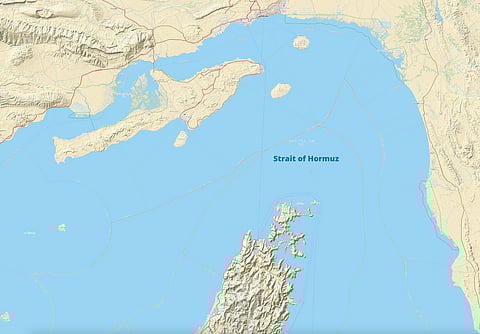
The Strait of Hormuz, a narrow maritime corridor at the mouth of the Persian Gulf, is not only vital for global oil supplies but also a key route for fertilizers, an essential input for agriculture in India and Pakistan.
Between 20 and 30 percent of global fertilizer exports pass through this chokepoint, making any disruption immediately felt across farming economies.
Caitlin Welsh, director of the Global Food and Water Security Program, has warned that fertilizer markets are already reacting sharply.
“One of the things that’s been most missing in coverage of the Iran war is discussion of fertilizer,” she said, noting that prices for key nitrogen fertilizers have surged to their highest levels since 2022.
For India and Pakistan, this is critical.
Both countries depend heavily on imported fertilizers to sustain crop yields, particularly for staples such as wheat and rice. Any spike in fertilizer prices directly raises the cost of cultivation, squeezing farmers and pushing up food prices for consumers.
“Fertilizer prices… are going to have impacts on crops in the coming months, potentially in the coming years,” Welsh cautioned.
The impact is already being felt in agricultural markets, where input costs are rising even before the next planting cycles begin.
Linkage to Food Security
Energy prices, driven higher by instability in the Gulf, are compounding the pressure. Modern agriculture is deeply dependent on fuel for irrigation, transport, and storage.
“Energy prices affect food prices… to run tractors, to run irrigation, to transport food, to refrigerate food,” Welsh explained.
“When energy prices increase, food prices increase.”
This dual shock fertilizer and fuel is bound to push food costs upward at multiple levels of the supply chain.
In India, where agriculture still supports nearly half the workforce, rising input costs could reduce farm incomes unless supported by subsidies. The government’s fertilizer subsidy bill, already substantial, may increase further, putting pressure on public finances.
For Pakistan, the situation is more fragile.
With inflation already high and foreign exchange reserves under strain, Islamabad has limited capacity to cushion rising fertilizer and fuel costs. Any disruption in imports through Hormuz or price spikes linked to it could lead to reduced agricultural output and higher food prices.
Food accounts for a significant share of household spending in both countries. Even modest price increases can force families to cut back on consumption, affecting nutrition and overall well-being.
The Gulf conflict is also exposing how tightly global food systems are linked to a small geographic region.
“A major type of fertilizer, urea—up to 50 percent of exports transit the Strait of Hormuz,” Welsh said, adding that even a single facility in Qatar accounts for a significant share of global supply.
Such concentration makes the system highly vulnerable.
When conflict disrupts supply routes, the effects are felt far beyond the immediate region. Countries begin competing for limited supplies, driving prices higher and widening the gap between those who can afford food and those who cannot.
Vulnerability of South Asia
For South Asia, which relies heavily on imports for key agricultural inputs, this vulnerability is particularly acute.
The contrast with the Russia–Ukraine war is instructive.
Despite initial fears, India and Pakistan managed to avoid a full-scale food crisis during that conflict, partly due to domestic production and policy interventions. But the Gulf War strikes at a different pressure point, fertilizers and energy, making it harder to shield domestic agriculture from global shocks.
Rising fertilizer prices, higher fuel costs, potential remittance losses and climate stress are all reinforcing each other, creating a complex and evolving food security challenge.
The longer the conflict in the Gulf continues, the greater the risk that disruptions in Hormuz will deepen and prolong the current shock.
What is unfolding is not just an energy crisis.
It is a food security challenge that is beginning to touch the daily lives of millions across South Asia.
As Caitlin Welsh’s analysis suggests, the full impact may not be immediate, but it will be felt in the months ahead in higher food prices, tighter household budgets, and growing uncertainty for farmers.
The war in the Gulf may be distant, but its consequences are already arriving on dinner tables, in farm fields, and in the fragile balance between supply and survival.
Have you liked the news article?
Support us now:
https://www.gofundme.com/manage/jammu-kashmirs-sole-independent-voice-under-threat