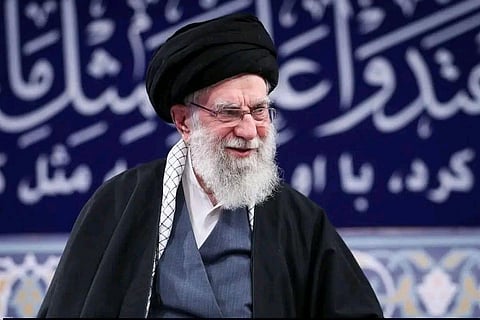


Recent protests in Srinagar mourning Ayatollah Ali Khamenei reflect deeply held religious sentiments among sections of the Shia community. For many, he symbolised resistance to Western hegemony and often spoke, at least rhetorically, about the plight of the oppressed worldwide, including Kashmir.
Such responses are rooted in faith, identity, and a sense of shared grievance. They deserve to be understood in that context. Yet international politics cannot be assessed solely through symbolism. Diplomacy rests not on sentiment, but on conduct. It is measured by state behaviour and adherence to international law.
The reported targeted killing of a sitting head of state raises grave legal and moral concerns. Article 2(4) of the United Nations Charter prohibits the threat or use of force against the sovereignty and territorial integrity of any state. Once political assassinations or regime-change doctrines become normalised instruments of policy, the global legal order is weakened.
For powerful nations, that erosion may appear manageable. For smaller states, disputed territories, and stateless peoples, it is perilous.
For Kashmiris, this is not an abstract legal debate. The weakening of foundational norms such as sovereignty, non-intervention, and the prohibition on the use of force directly reduces the limited protections available under international law. When global rules bend for strategic convenience, those without power pay the highest price.
At the same time, emotional solidarity should not obscure a sober assessment of state policy. Iran’s posture on Kashmir, over decades, reflects a pattern familiar in international relations: strong rhetorical positions paired with strategic restraint that has, at decisive moments, aligned with India’s interests.
The most consequential example came in 1994 at the UN Commission on Human Rights. A resolution backed by Pakistan and several Organisation of Islamic Cooperation (OIC) member states sought to censure India over human rights violations in Jammu and Kashmir. Iran initially supported the initiative.
However, following high-level diplomatic engagement from New Delhi, including a special mission led by then External Affairs Minister Dinesh Singh under Prime Minister P. V. Narasimha Rao, Tehran withdrew its support. Without Iran’s backing, the fragile consensus behind the resolution collapsed. India avoided multilateral censure.
This was not an incidental diplomatic adjustment. It reflected a strategic calculation.
Iran's relations with India
Through the 1990s and into the 21st century, Iran prioritised its geopolitical and economic relationship with India. Energy exports, infrastructure and connectivity projects, and cooperation in Afghanistan against the Taliban carried tangible strategic value. Kashmir, in contrast, remained largely within the realm of speeches and statements.
Even when Iranian leaders invoked Kashmir in strong moral language, it did not translate into sustained diplomatic pressure, economic leverage, or coordinated multilateral advocacy. No consistent campaign was mounted within the Organisation of Islamic Cooperation or the United Nations. No measurable diplomatic risk was assumed on Kashmir’s behalf.
This duality, ideological sympathy without policy consequence, has defined the approach.
Recognising this distinction is not an exercise in cynicism. It is an exercise in political maturity. Kashmir’s engagement with the Muslim world, and with the broader international community, must be guided by evidence rather than emotion. International alignment must be measured through votes cast, resolutions tabled, trade policies adjusted, and diplomatic risks taken.
States that speak are not always states that act.
At the same time, empathy remains essential. We extend our condolences to the people of Iran and to millions worldwide for whom Ayatollah Ali Khamenei, as Supreme Leader and a senior religious authority, held deep spiritual meaning. In moments of loss, compassion should not be conditional on political alignment.
But compassion cannot replace clarity.
If international law is to protect the vulnerable, it must be defended consistently. The prohibition on the use of force, the rejection of extrajudicial political killings, and the inalienable right of peoples are universal principles.
Any future diplomacy must, therefore, move beyond symbolic expectation. It must be rooted in legal argumentation, strategic engagement, and diversified alliances. It must seek partners willing not only to express solidarity, but to institutionalise it.
For a people long caught between competing nationalisms and shifting global priorities, the lesson is clear. Moral language matters. But measurable action matters more.
Only when solidarity carries diplomatic cost can it be called solidarity in the truest sense.
Have you liked the news article?
Support us now:
https://www.gofundme.com/manage/jammu-kashmirs-sole-independent-voice-under-threat