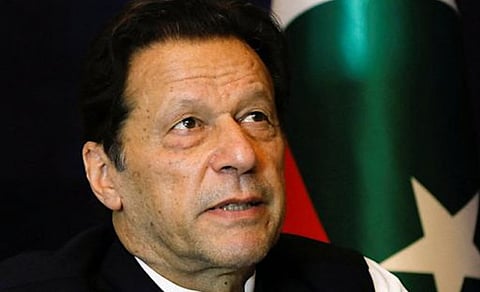

Recently, I came across Dr Mubeen Shah’s article in the Kashmir Times. I agree with his central argument that human dignity transcends political allegiance. No individual, regardless of office held or party affiliation, should be subjected to degrading treatment in custody. That principle is foundational to any democracy that seeks moral credibility.
His focus on humane treatment in detention is unquestionably important, but it largely overlooks the political and institutional dynamics that led to this moment. To defend dignity without interrogating the broader culture of politics risks narrowing a national reckoning into a single-issue debate.
Pakistan’s constitutional framework and prison regulations entitle every detainee to basic nutrition, sanitary conditions, access to medical care, and consultation with family and legal counsel. These guarantees are reinforced by the international human rights instruments to which Pakistan is a party. If these standards are not met, the state must be held accountable through courts and independent oversight.
In the case of former prime minister Imran Khan, officials maintain that prison authorities are operating within established legal procedures. High-profile detainees, by virtue of security considerations and public sensitivity, often receive arrangements commensurate with their status. If medical evaluations are required, they should be conducted. If court orders mandate access, they must be implemented. Transparency is essential to prevent suspicion from hardening into mistrust.
However, safeguarding these rights is only one part of the story. Dr Shah rightly asks whether Pakistan can separate law from vengeance. But the political culture that produced this detention also deserves equal scrutiny.
Imran Khan’s rise was powered by a potent narrative of anti-corruption and moral renewal. For many Pakistanis, especially younger voters, his message resonated. Populist movements can invigorate democracies by exposing complacency and amplifying overlooked grievances. They can disrupt stagnant political systems.
But populism can also blur the line between principled opposition and perpetual confrontation. Over more than a decade, political discourse in Pakistan increasingly shifted from policy debate to moral denunciation. Opponents were framed not simply as rivals with different ideas, but as conspirators and traitors. Language hardened. Political disagreement became existential.
This transformation was not merely rhetorical. It shaped incentives across the system. Institutions were pulled into partisan battles. Bureaucrats, judges, and media figures found themselves navigating an environment in which loyalty was prized and dissent often equated with sabotage. The space for nuanced policy discussion narrowed.
Vulnerable Institutions
When political leaders, even while in office, rely on invective rather than institutional strengthening, the long-term damage is significant. Institutions become vulnerable to politicisation. Public trust erodes. Governance becomes reactive rather than strategic. In such a climate, legal proceedings against political figures are almost inevitably interpreted through partisan lenses.
Demanding humane treatment in custody is necessary. Pretending that the political conduct of those now detained has no bearing on institutional fragility is disingenuous. A healthy democracy must be capable of holding two thoughts at once: that rights must be protected without exception, and that leaders must be accountable for their choices in power.
Beyond tone, there is the record of governance. Imran Khan’s tenure witnessed abrupt shifts in foreign policy messaging that unsettled long-standing diplomatic relationships. Economic management appeared uneven, with frequent changes in key economic posts and repeated recourse to external financial support. Domestic security concerns resurfaced in troubling ways. For ordinary citizens, these translated into inflationary pressure, uncertainty, and anxiety about the country’s direction.
When leaders make decisions that shape the economy, foreign relations, and internal security, those decisions must be open to scrutiny. Investigations and trials must follow due process, free from political interference.
If there are deficiencies in medical care or access, they should be addressed immediately and transparently. If standards are being met, that fact should also be acknowledged. Oversight mechanisms exist precisely to prevent abuse and to reassure the public that law, not vendetta, is guiding the process.
Yet Pakistan’s deeper test lies beyond the prison walls. Can the country rebuild a political culture in which disagreement is robust but not dehumanising? Can parties compete on programmes rather than personalities? Can institutions regain a reputation for neutrality rather than factional alignment?
Reform requires parallel commitments. First, the state must demonstrate scrupulous adherence to legal and human rights standards in all detention cases. Medical needs must be met without delay. Family and legal access must be guaranteed. Independent monitors must be allowed to function without obstruction.
Second, political actors, civil society, and the media must undertake honest introspection. That includes examining how populist theatrics often replaced reasoned persuasion, how policy planning yielded to personality-driven narratives, and how public discourse became saturated with suspicion and recrimination. It requires acknowledging that institutional erosion is rarely the work of one actor alone.
Defending the dignity of a prisoner and insisting on accountability for leaders are not mutually exclusive. They are complementary obligations of a mature polity. Pakistan’s moral consistency will be judged not only by how fairly it treats a former prime minister today, but by whether it commits to restoring civility, strengthening institutions, and grounding political competition in policy rather than spectacle.
Only when dignity in detention is matched by dignity in politics will Pakistan move beyond cycles of polarisation toward a more stable and principled democratic order.
Have you liked the news article?
Support us now:
https://www.gofundme.com/manage/jammu-kashmirs-sole-independent-voice-under-threat
