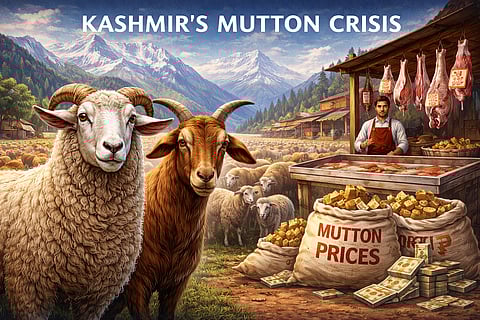


Jammu and Kashmir imports approximately 14 lakh sheep and goats annually to meet its meat demands, draining between Rs 1,000 and Rs 1,400 crore from the local economy each year.
The region produces only 30,000 tonnes of mutton locally but consumes around 60,000 tonnes annually, creating a massive supply gap that is filled primarily through imports from Rajasthan, Haryana, Gujarat, and Uttar Pradesh.
"The major supply chain runs from Ujlan-Jaisalmer, Jaipal Basti, Jaisalmer, and Sikar areas of Rajasthan, besides other states," said Mehraej Ahmad Ganaie, a senior office-bearer of the Mutton Dealers Association Kashmir (MDAK).
The trade imbalance extends beyond economics into the cultural fabric of Kashmir, where mutton holds central importance in daily life and celebrations. From the aromatic Rogan Josh and Rista to the celebrated Gushtaba, mutton forms the soul of Wazwaan – Kashmir’s traditional grand feast that serves as a covenant of community and identity.
During winter months, marriage seasons, and religious festivals, Kashmiri kitchens and community kitchens (Vorae) fill with the rich sizzle of browning mutton and the fragrance of traditional spices, representing centuries of culinary heritage.
The region's dependence on external sources for this cultural staple raises concerns about economic sustainability, cultural vulnerability, and public health safeguards. Experts suggest that transforming Kashmir's traditional pastoral sector into a modern, high-value industry could secure both the economy and the cultural traditions centered around this essential ingredient.
Unpacking a Systemic Crisis
The current state of affairs is the result of decades of systemic neglect in which short-term fixes have consistently taken precedence over strategic thinking for the long term.
This multi-layered crisis intertwines environmental degradation, economic shortsightedness, and emerging health concerns that demand urgent attention from healthcare institutions across Jammu and Kashmir.
Vanishing Pastures and Stagnant Genetics
The very bedrock of sheep-rearing is crumbling. The vast natural grazing lands, also known as margs, alpine pastures, village Kacharai which were once used to feed large flocks of animals are disappearing at an alarming rate.
These commons have been steadily destroyed by urban sprawl, infrastructure projects, and shifts in land use. The remaining land is frequently degraded, overgrazed, and unable to sustain a healthy livestock population.
A complete way of life is in jeopardy for the nomadic Gujjar and mainly Bakerwal communities' traditional migratory routes and diminished pastures.
A crisis of genetic stagnation adds to this ecological problem. Local breeds like the tough Kashmir Merino and the fine-wooled Gaddi, which are perfectly suited to the harsh mountain climate, are found in J&K. However, their meat production is low.
The international breeds of sheep, which can provide yields that are double or triple that of local breeds, have carcasses that average around 12 kilograms. The focus remained on wool and survival for generations, not systematic genetic improvement for meat production.
The industry comprises an informal, dispersed network of smallholders lacking access to modern fodder management systems, high-quality breeding rams, or professional veterinary care. It is a sector operating far below its potential, unable to meet the soaring domestic demand.
Crippling Economic Drain
An ongoing, self-inflicted economic wound can be seen in the size of the annual import bill, which amounts to hundreds of crores of rupees flowing to other states.
This capital, if retained and reinvested within J&K, could transform rural infrastructure, fund cutting-edge agricultural research, and provide direct incentives to farmers. Instead, it enriches supply chains elsewhere, draining the region’s economic vitality.
This external dependency creates a profound vulnerability.
The lifeline for Kashmir’s mutton supply is the precarious Jammu-Srinagar National Highway (NH44). A landslide, a security closure, or severe weather - which are frequent in occurrence – can sever this pulmonary vein, leading to severe shortages, panic buying, and skyrocketing prices that cost many families even a basic meal.
A stark and moving illustration of how an economic supply-chain failure can directly paralyse a fundamental cultural and social ritual has been documented in instances where families were forced to postpone weddings due to lack of sheep. The mountain road holds the feast and the community it unites hostage.
Beyond economics and cultural implications, the wide gap between demand and supply also poses significant health challenges.
(To be Continued)
Have you liked the news article?
Support us now:
https://www.gofundme.com/manage/jammu-kashmirs-sole-independent-voice-under-threat