

An Urgent Plea from the Advisory Council
MUZAFFARABAD: On 8 June 2026, the Advisory Council of the Jammu Kashmir Joint Awami Action Committee (JKJAAC) issued an urgent public letter addressed to the President of Pakistan, the Prime Minister of Pakistan, the Prime Minister of Azad Jammu and Kashmir (PaJK), and the leaders of every political party — demanding an immediate halt to the bloodshed in Rawalakot and across Pakistan-administered Jammu and Kashmir (PaJK).
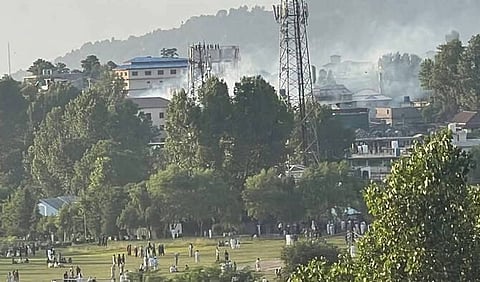
The letter comes in the wake of deadly clashes between security forces and protesters on 7–8 June in Rawalakot, following the killing of activist Shahzeb Habib by law enforcement. His death sparked mass demonstrations. When police moved to disperse mourners gathered at the Combined Military Hospital, where his body was being held, firing broke out. The dead include at least seven civilians and four security personnel. Community sources allege the true toll is far higher, though a near-total communications blackout — with mobile internet cut across large parts of the region — makes independent verification impossible.
Pakistan Accused of Breaking Its Own Word
The Advisory Council's letter makes a pointed argument: Pakistan cannot hold the moral high ground on Kashmir while doing in AJK (PaJK) exactly what it condemns India for doing across the Line of Control.
The letter cites Pakistan's own Ministry of Foreign Affairs, which stated on 3 October 2025 that the people of AJK (PaJK) "freely enjoy their civil and political rights" and that Pakistan is committed to "upholding their dignity" and safeguarding their right to "peaceful assembly and protest." The Council says what is happening in Rawalakot — firing on mourners, blocking funeral prayers for Shahzeb Habib, cutting communications, denying medical access, and mass arrests — is a direct contradiction of that commitment.
"Pakistan cannot condemn the denial of fundamental freedoms in Indian-administered Jammu and Kashmir while allowing similar methods to be used in Azad Jammu and Kashmir (PaJK)," the letter states.
The Council also traces the current crisis to an earlier broken promise. The Muzaffarabad Agreement of 3–4 October 2025, signed after negotiations between JKJAAC, the Government of Pakistan, the Government of AJK, and federal ministers, accepted JKJAAC's Charter of Demands in principle and made Pakistan a guarantor. The Council says it has not been implemented.
"They Are Not Terrorists. They Are Citizens."
The letter pushes back firmly against the government's designation of JKJAAC as a proscribed terrorist organisation, a label the AJK administration applied on Friday, days before the group's planned June 9 long march to Muzaffarabad.
"JKJAAC and the people of Azad Jammu and Kashmir are not enemies. They are not terrorists. They are not foreign agents," the letter reads. "They are citizens, mourners, workers, traders, students, lawyers, mothers, fathers and young people demanding dignity, justice, accountable governance, implementation of written agreements, fair representation and democratic rights."
The Advisory Council is calling for a ceasefire, the lifting of the communications blackout, immediate medical access for the injured, Red Cross access to document casualties and assist families, the release of detainees, and an independent judicial inquiry into the killings.
A Warning to Those Who Stay Silent
The letter closes with a direct appeal to all political parties in Pakistan and AJK to set aside partisan calculations and speak out — warning that "Silence at this hour will be remembered."
The Council's spokesperson put it plainly: "Pakistan's moral argument on Kashmir cannot survive if the Kashmiri lives in Azad Jammu and Kashmir are treated as expendable. The first duty is to stop the killing."
The full text of the JKJAAC Advisory Council press release follows below.
FULL TEXT: JKJAAC Advisory Council Press Release — 8 June 2026
"Stop the Killing, Honour Your Pledge": JKJAAC Advisory Council Urges Pakistan's President, Prime Minister and Political Leaders to End Rawalakot Bloodshed
Advisory Council says Rawalakot crackdown is a breach of trust, a human rights emergency, and a test of Pakistan's own commitment to Kashmiris' civil and political rights
For immediate release Rawalakot / Muzaffarabad / Islamabad / London | 8 June 2026
The Advisory Council of the Jammu Kashmir Joint Awami Action Committee (JKJAAC) has issued an urgent joint letter to the President of Pakistan, the Prime Minister of Pakistan, the Prime Minister of the Azad Government of the State of Jammu and Kashmir, and the leaders of all political parties, calling for an immediate halt to the bloodshed in Rawalakot and across Azad Jammu and Kashmir.
The letter states that Azad Jammu and Kashmir is not an ordinary administrative unit but part of the disputed State of Jammu and Kashmir, whose constitutional and international status is linked to the United Nations Security Council and UNCIP resolutions and Pakistan's stated commitments to the Kashmiri people. The letter also reminds Pakistan's leadership that the Ministry of Foreign Affairs stated on 3 October 2025 that the people of AJK "freely enjoy their civil and political rights" and that Pakistan is committed to "upholding their dignity" and safeguarding their right to "peaceful assembly and protest."
The Advisory Council says the events in Rawalakot between 7–8 June 2026, including reports of the obstruction of funeral prayers for Shazaib Habib, the use of force against mourners, the communications blackout, arrests, and denial of medical access, represent a grave breach of trust and a direct contradiction of Pakistan's own declared obligations to the people of AJK. Public reporting has already confirmed deaths, arrests and continuing unrest in Rawalakot, while community reports allege a much higher death toll and hundreds injured, requiring urgent independent verification.
In the letter, the Advisory Council states:
"JKJAAC and the people of Azad Jammu and Kashmir are not enemies. They are not terrorists. They are not foreign agents. They are citizens, mourners, workers, traders, students, lawyers, mothers, fathers and young people demanding dignity, justice, accountable governance, implementation of written agreements, fair representation and democratic rights."
The letter further warns that Pakistan cannot condemn the denial of fundamental freedoms in Indian-administered Jammu and Kashmir while allowing similar methods — communications blackouts, criminalisation of peaceful dissent, obstruction of funeral prayers, denial of medical treatment, and the use of force against civilians — to be used in Azad Jammu and Kashmir. Pakistan's Foreign Office had itself contrasted Pakistan's position on AJK with India's conduct in Indian-administered Jammu and Kashmir, stating that Pakistan safeguards the rights of the people of AJK, including the right to peaceful assembly and protest.
The Advisory Council says the crisis did not arise in isolation. It follows the non-implementation of the Muzaffarabad Agreement of 3–4 October 2025, signed after negotiations involving the Government of Pakistan, the Government of AJK, federal ministers and political leadership. The Council says JKJAAC's Charter of Demands was accepted in principle, Pakistan acted as guarantor, but the agreement has not been implemented in letter and spirit.
The letter calls on Pakistan's civil and military leadership, the AJK Government and all political parties to act immediately, stating:
"There is still time to pause. There is still time to reflect. There is still time to save lives. But that time is now."
Key Demands Made by the JKJAAC Advisory Council
1. Immediate ceasefire and de-escalation in Rawalakot and across AJK.
2. An end to firing, shelling, raids, coercive arrests and house searches against civilians, mourners and civil rights activists.
3. Permission for funeral prayers and burial rites for Shazaib Habib and all deceased civilians to proceed peacefully and with dignity.
4. Immediate medical access for all injured civilians at Combined Military Hospital Rawalakot and all other hospitals.
5. Access for the International Committee of the Red Cross, independent doctors and humanitarian observers to treat the injured, identify the dead, assist families and preserve evidence.
6. Publication of verified lists of all deceased, injured, detained and missing persons.
7. Preservation and return of bodies to families with dignity and independent documentation.
8. Immediate restoration of internet, mobile and WhatsApp communications across AJK.
9. An end to house raids, intimidation of women and children, and collective punishment of families.
10.Release of detainees or prompt production before courts with access to lawyers and families.
11.Withdrawal of the proscription of JKJAAC, which the Council describes as a peaceful civil and political rights movement.
12.An independent judicial and internationally credible inquiry into the killing of Shazaib Habib, the firing on mourners, reported deaths and injuries, denial of medical treatment, arbitrary arrests, and the role of police, paramilitary and military units.
13.Implementation of the Muzaffarabad Agreement through a public roadmap within 48 hours.
14.Immediate resumption of dialogue with the JKJAAC Core Committee and its designated negotiation team.
Statement from the JKJAAC Advisory Council
A spokesperson for the Advisory Council said:
"This is a moment for statesmanship. Pakistan's moral argument on Kashmir cannot survive if the Kashmiri lives in Azad Jammu and Kashmir are treated as expendable. The first duty is to stop the killing. The first proof of commitment is to allow the injured to be treated, the dead to be buried, the detained to be accounted for, and the people to speak."
The spokesperson added:
"The people of AJK have carried Pakistan's moral argument on Kashmir for decades. They must not now be treated as a security problem. We appeal to the President, Prime Minister, AJK Prime Minister and all political parties: pause, reflect, act, save lives."
Appeal to Political Parties
The Advisory Council has also called on all political parties in Pakistan and Azad Jammu and Kashmir to rise above partisan interest and publicly demand an end to the use of force, restoration of communications, access to medical treatment, protection of funeral prayers, release or production of detainees before courts, implementation of the Muzaffarabad Agreement, and a political solution through dialogue.
The letter warns:
"Silence at this hour will be remembered."
Background for Editors
The Jammu Kashmir Joint Awami Action Committee has led a civil rights movement in AJK around public services, electricity, flour subsidies, elite privileges, resource justice, democratic equality, implementation of the Muzaffarabad Agreement, and reform of the 12 non-territorial/refugee seats in the AJK Legislative Assembly. Previous reporting has documented JKJAAC-led protests, negotiations with the Government of Pakistan and the Government of AJK, and concerns over communications blackouts and the use of force during earlier protest waves.
The latest escalation follows the reported proscription of JKJAAC under anti-terror laws ahead of the planned 9 June mobilisation. Pakistan Today reported on 8 June 2026 that at least seven civilians had been killed in Rawalakot clashes and that arrests and a wider crackdown were continuing. Republic World reported funeral-related violence and army cordons in Rawalakot. The UK Foreign, Commonwealth and Development Office updated its Pakistan travel advice on 6 June 2026, advising against all but essential travel to AJK.
Media contact Name: JKJAAC Spokesperson Email: admin@jkjaac.co Phone / WhatsApp: 0044
Have you liked the news article?
Support us now:
https://www.gofundme.com/manage/jammu-kashmirs-sole-independent-voice-under-threat