

Guest Reporter
Thirty kilometres from the district headquarters of Baramulla, villages like Judinambal, Braman, and Lariangan in Kashmir's Rafiabad area are cut off. Beyond the geographical impediments of mountains and fair-weather roads, the absence of a reliable phone signal leaves the area isolated.
The communities living here are, what locals call, "digitally stranded." Airtel, the only network provider that serves the area, works inconsistently. SIM cards from other providers are completely non-functional.
Calls drop mid-sentence. Internet signals vanish. Basic services like telemedicine, digital payments, and government portals become gambles. Residents have no alternative but to depend on a network that regularly lets them down.
How Daily Life is Impacted
The consequences are multiple and long-lasting. People travel to neighbouring areas just to submit an online form, attend a virtual class, or complete a routine transaction. In emergencies, the inability to make a call blows up into a crisis.
For Abrar Ahmad Kumar, 22, a graduate running a small shop while pursuing his studies, the problem hits where it hurts most: his income.
As India pushes toward a cashless economy through platforms like BHIM UPI, customers increasingly want to pay digitally, even for small purchases. But visitors on different networks simply cannot complete transactions.
"Customers want to pay digitally, but the network doesn't support it. They feel helpless, and so do we," Abrar says. "In emergencies, people cannot even make urgent calls or payments. Many are forced to leave the area just to find connectivity."
What is celebrated nationally as convenience becomes, at the local level, a mechanism of exclusion. The digital divide in Rafiabad is not a lag to be caught up with. It is a structural disadvantage, quietly deepening every day.
Education Suffers, Youth Left Behind
The ripple effects extend to education, where students are among the hardest hit. In these villages, connectivity technically exists, but it depends almost entirely on a single network that often works unpredictably.
When the signal weakens or disappears, which happens frequently, students are effectively cut off from the digital learning ecosystem that many of their peers elsewhere now take for granted.
Sajad Ahmad Kumar (23), a resident of Judinambal, describes how this inconsistent connectivity limits access to learning opportunities.
“Online classes, recorded lectures, exam preparation, and skill development have become normal elsewhere. Here, everything depends on whether the network works at that moment. Even accessing basic educational content becomes difficult. Our backwardness is not academic, it is digital,” he says.
In the post-pandemic era, when education has become deeply intertwined with technology, unreliable connectivity means students regularly miss lectures, deadlines, scholarship announcements, and online application windows. Over time, these interruptions accumulate, widening inequalities that education is meant to reduce.
Zubair Ahmad Najar (21), also from Judinambal, echoes the frustration shared by many young residents. “We are living in a time when connectivity is considered a basic necessity. Yet our villages depend on one network that works only sometimes. When it fails, we are completely cut off while the rest of the country moves ahead.”
Students often cope in improvised ways. Sometimes a student buys a new phone along with a SIM card from a different service provider. In such cases, the device becomes practically useless for internet access and other facilities unless they travel outside the area. Many students, therefore, depend on friends or relatives who have SIM cards connected to the single working network.
Even then, connectivity is far from reliable. Students frequently gather in small spots where the signal is slightly stronger or wait for brief moments when the internet reappears.
During exam periods, some high school students recount walking over a kilometre to nearby hilltops or elevated areas where the signal is marginally better, turning what should be ordinary study time into a test of physical endurance rather than academic effort.
Digital Void Places the Area out of Tourism Map
Telecommunication issues also hinder the region’s emerging eco-tourism potential. Scenic locations such as Vijitop, Bosiyan, and Gabiwar, gateways to pristine eco-tourism destinations, rely on the same fragile connectivity corridor.
Visitors arriving in these areas encounter a similar challenge. No signal means no navigation apps, no emergency calls, no digital payments, and no social media sharing that could help promote these natural attractions.
This situation not only discourages visitors but also undermines an important alternative livelihood for rural communities seeking to diversify beyond agriculture.
Digitally Stranded for Over a Decade
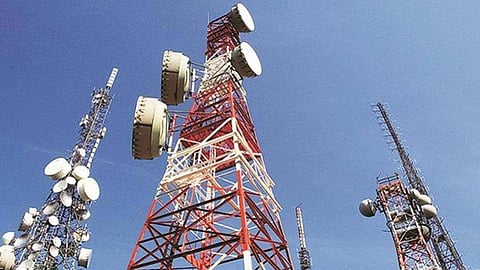
The connectivity problem is not new. Network services in these villages date back more than a decade, when the first tower was installed around 2012–2013. Initially celebrated as a breakthrough, service quality has largely stagnated since then.
Despite widespread 4G expansion across Jammu and Kashmir, these villages continue to rely on patchy and unreliable signals. Seasonal weather conditions such as heavy snowfall and monsoon rains further aggravate outages, though residents often attribute the issue to insufficient infrastructure investment.
Connectivity also determines access to essential public services. Government schemes, welfare benefits, and appointments increasingly require online registration, OTP verification, or mobile-based applications.
For residents here, completing even simple administrative tasks often requires travelling long distances, turning essential services into exhausting journeys. Telemedicine, particularly important in remote regions with limited healthcare access, remains largely inaccessible due to unstable networks.
Systemic Neglect
This situation raises broader questions about regional equity and infrastructure planning. When villages located close to district headquarters remain digitally underserved, the issue reflects not geographical distance but systemic neglect.
Telecom expansion frequently follows commercial priorities, favouring high-density urban markets over rural areas with lower revenue potential. While commercially rational, such priorities contradict the national commitment to inclusive digital development.
The experience of villages like Judinambal, Braman, and Lariangan raises a pertinent question. Can a nation truly claim digital inclusion when connectivity still depends on geography, chance, and a single unreliable signal?
India today proudly stands at the forefront of rapid digital transformation. From online education and digital payments to telemedicine, e-governance, and direct benefit transfers, technology has become the backbone of development and social progress.
Initiatives such as Digital India promise to bridge long-standing gaps, empower citizens, and deliver services to the last mile. In many urban and semi-urban areas, this vision has translated into visible change. Yet beyond these success stories lie regions like these forgotten villages of Rafiabad, where digital progress remains more a promise on paper than a lived reality.
The Way Forward
Addressing this challenge requires coordinated action from policymakers, telecom service providers, and local administration.
Expanding network diversity through additional towers, encouraging competition among providers, strengthening public-sector infrastructure, and establishing transparent timelines for 4G and future 5G coverage are essential steps. Mechanisms such as community-based digital audits could also help incorporate residents’ feedback and ensure greater accountability.
Digital progress must not stop at city boundaries. For development to be meaningful, it must reach these communities urgently, not eventually. Today, connectivity is no longer merely about speed or convenience. It is about access to education, livelihoods, public services, tourism potential, and basic dignity.
Until this last-mile gap is bridged, the promise of Digital India will remain incomplete for many communities in Kashmir, celebrated in policy documents and speeches, yet absent from everyday life.
Have you liked the news article?
Support us now:
https://www.gofundme.com/manage/jammu-kashmirs-sole-independent-voice-under-threat